Posted in Home, Movie/Book Reviews, Writing

The ‘Emily Wilde’ Series Fulfilled my Fantasy-Academia-Cottagecore Fushion Dreams: Book Review

Overall Rating: ★★★★✬ (4.75) 🡢 Book One with 5 stars, Book Two with 4.5 stars
Themes: friendship, personal growth, found family (this book is less about themes and more about character development!)
Moods: adventerous, light-hearted, funny (at times), mysterious
Pacing: Medium (in both books it starts slow, but gets faster near the end)
Who should read it: anyone interested in a story including adventerous professors of dryadology uncovering mysteries of faeries – a lot of banter, coziness, lovable villagers, and charming landscapes. anyone that loves cozy fantasy will adore this series!
Plot or Character Driven: a mix of both!
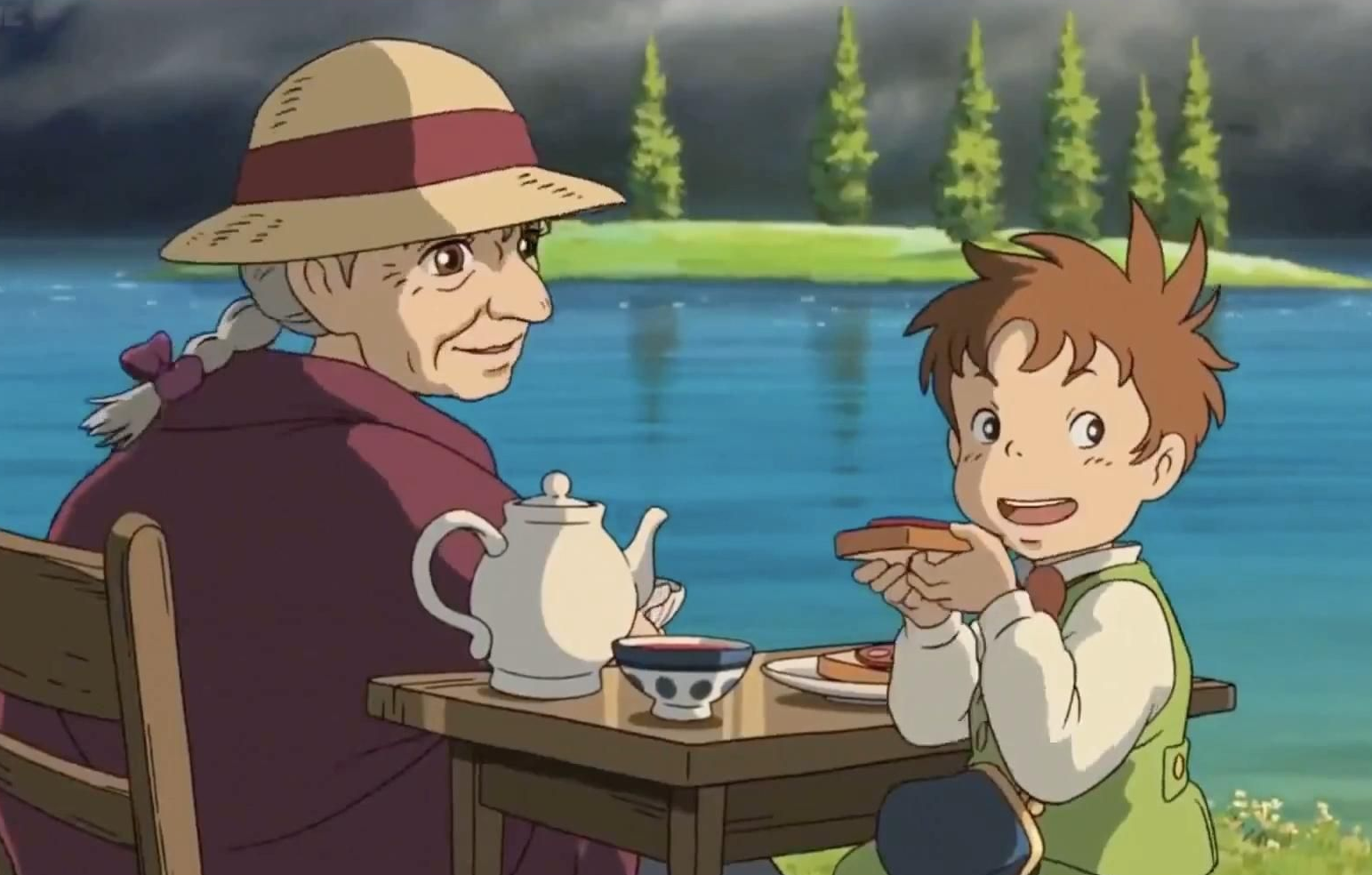
Coffee or Tea book? fruit tea, with strawberry jam bread!

“I wish to know the unknowable. To see what no mortal has seen, to— how does Lebel put it? To peel back the carpeting of the world and tumble into the stars.”

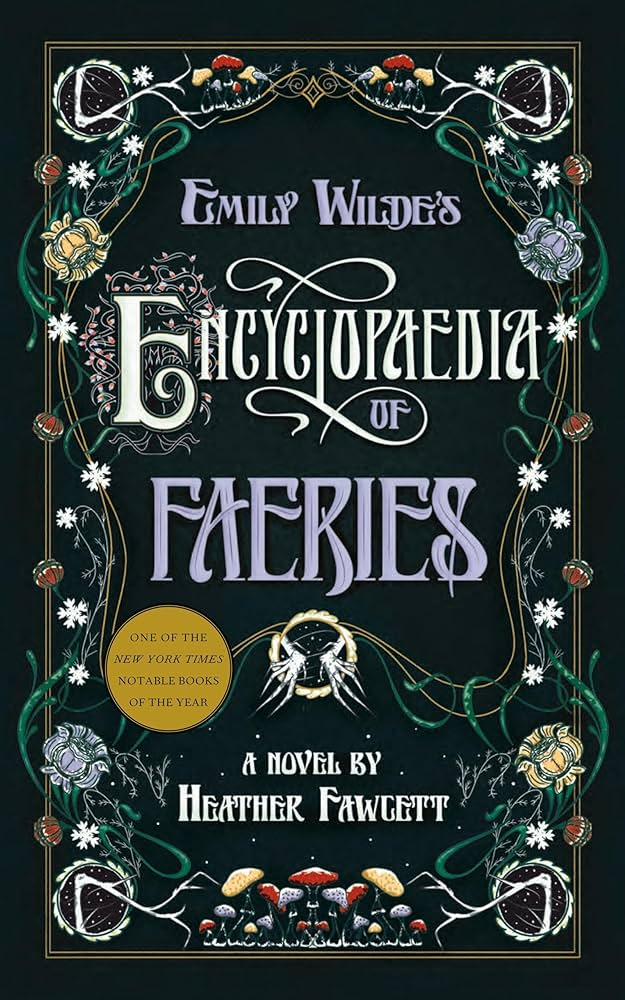
I picked up Emily Wilde’s Encyclopaedia of Faeries just after finishing Blood Over Bright Haven (by M.L. Wang). Without getting into it too much, Wang’s book was beautifully written with a powerful narrative; however, it contained heavy themes that I was looking to take a little break from after I finished it. I had had Emily Wilde on my TBR list since last year, but had almost written it off thinking it sounded like something I would have enjoyed more when I was a preteen (not quite sure what I was thinking when I first read the blurb for the book, but I thought it would be a lot more like Keeper of the Lost Cities by Shannon Messenger). For the last few months I had been reading darker fantasy, contemporary fiction, and dystopian novels, and was looking for a book that would be easy to digest.

So, I began my journey into Heather Fawcett’s world. Two books later — plus a week after finishing — I still think picking up the Emily Wilde series was my best book decision of 2024!

(Alas, this will be more of a microreview – school is keeping me busy!)

What I Loved:

  • character dynamics ⫸ Apart from the main characters (Emily and Wendell), the side characters are also quite loveable! I especially loved the friendships that Emily formed with the villagers in the first book (like Lilja!). And how could I forget Emily’s eventual fondness for Poe?
  • character ages ⫸ I loved that the characters are older than me – I’ve slowly been outgrowing all the protagonists i rooted for growing up (looking at you, Harry Potter, Percy Jackson, etc.), so this was nice to see. People over the age of 20 can successfully be main characters in fantasy books!
  • setting ⫸ Nordic and Germanic villages. Cottagecore atmosphere through and through with beautiful descriptions of the scenery – you’re in for a treat!

“The loveliness of the view outside stopped me in my tracks. The mountain fell away before me, a carpet of green made greener by the luminous dawn staining the clouds with pinks and golds. The mountains themselves were lightly ensnowed, though there was no threat of a sequel in that cerulean canopy. Within the hinterlands of the prospect heaved the great beast of the sea with its patchy pelt of ice floes.”

  • genre fusion ⫸ Fusing academia, fantasy, and adventure. I really enjoyed the analytical approach to faerie mythology as an academic myself!
  • realistic characterizations ⫸ I found Emily very relatable. She is an introverted academic that really just wants to throw herself into her work. She also isn’t pitched as a perfect protagonist – she has difficulties communicating her thoughts and feelings to others and thus often comes across as a grouch. But the important part is that she accepts and works on this, so she is still likeable!
  • lessons ⫸ I may be reading too much into this, but I feel that these books have an underlying lesson in kindness, as well as growing into yourself and the people around you. This definitely adds to the coziness and feel-goodness of the read!

“If you do not admit kindness from others, you cannot be surprised when they fail to offer any.”

  • romance ⫸ Unlike other reviews of this series so far, I don’t feel like feel the romance came out of nowhere, just that it was told from Emily’s side of the story and not Wendell’s. Given Emily’s inclination to logic instead of emotion, to her, friendship and teamwork was a better basis to a relationship than a grand romantic realisations. I feel that this is an excellent representation of how some people in the real world fall into love themselves.
  • comedic dialogue ⫸ These books definitely could’ve been written in a much darker tone. However, I very much enjoyed the lightness of the dialogue; probably even more so because I started this right after finishing Blood over Bright Haven (a post for another time perhaps?). We have Wendell’s flamboyance and Emily’s sarcasm to thank for that – see quotes below!

“This was Bambleby, after all — my only friend. (God.)”

“Get inside! You’re bleeding!”
“I will not bleed any less indoors, you utter madwoman.”

  • a good ending ⫸ I felt I could count on a nice ending from these books – call me childish, but I definitely welcomed the pace, easiness, and comfort of these stories (especially given the others I read recently: Babel and Never Let Me Go, for starters!)
  • writing style ⫸ The prose is captivating and the author’s voice/tonality/ is powerful. Usually all the books I love have this attributed to them!
  • sidequests! ⫸ Not everything felt like it was constantly pushing for the plot to move forward. I felt this also contributed to the easiness and warmth of the books.
  • portrayal of faerie ⫸ All I can say is that it was an exciting twist on things that really brough folklore alive!

What I Wished/Hoped For:

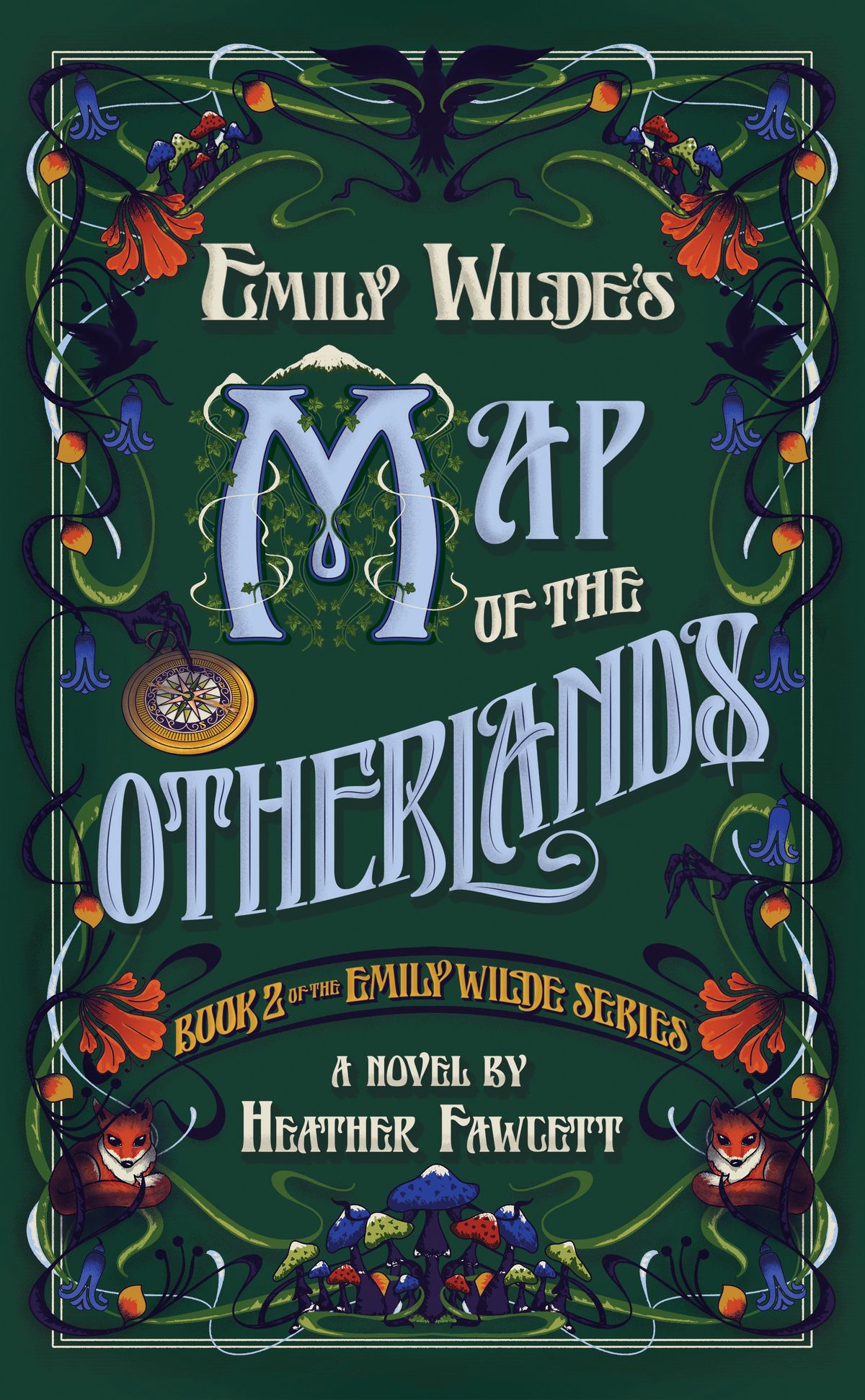
  • I liked the second book ever so slightly less ⫸ I think this is because I was partial to the nordic/icelandic setting of the first book. We also got to see a lot more of the villagers in the first book, and I definitely enjoyed the times when Emily and Wendell went on adventures by themselves the most. I wish these translated over the the second book more faithfully, but this is just my opinion!
  • I didn’t quite understand the journal format ⫸ How does she remember all the conversations and details? Emily writes as if she’s a removed narrator of her own story. The narration style could easily have been changed – but I guess this isn’t quite a wish! The style is easy to overlook (I could totally chalk it up to Emily being a genius). Plus, I enjoyed the footnotes and whenever the occasional Wendell POV was added as a sneaky stolen journal entry!

Even with some of the very minor aspects I didn’t love, this series has so so SO many good things about it! If you’re on the fence about starting the series, this is your sign to dive right in without looking back. Fall/Winter are definitely the best seasons to read this series given its warmth.

Lastly, this series isn’t even over yet – this is one of the rare times where I will be counting down the days for another book without forgetting about a series entirely. I’ll be first in line for Emily Wilde’s Compendium of Lost Tales when it comes out!
Posted in Hobbies, Home, Movie/Book Reviews, Writing

The Essence of Childhood: Ponyo

For me, Ponyo is a comfort movie. It gets mixed reviews on its content and movie progression, ranging from appreciation to mild irritation at the storyline. I feel like a lot of people forget that as a children’s movie, Ponyo does not need the most believable plot (or a more subtle colour palette). The beauty and appeal of Ponyo is that it takes a deep dive into how a child’s mind perceives their life. The world is bright and mysterious, full of new discoveries every day. The quote written on the official movie poster is literally welcome to a world where anything is possible.

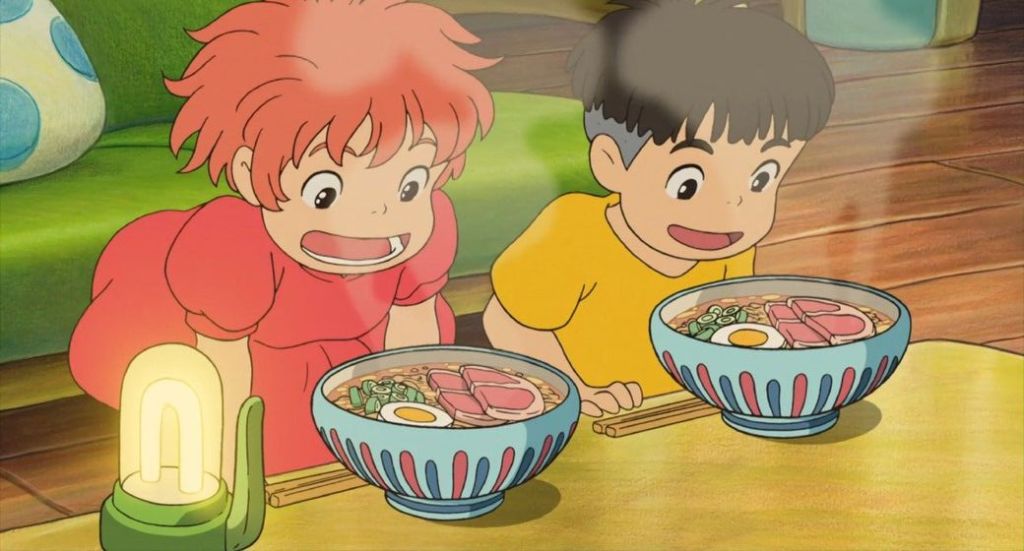
Ponyo – the movie’s namesake – is first introduced as a charming aquatic creature with a fierce desire to explore the world beyond her home. Her wishes are so strong that they grow, and grow, until they manifest into human limbs and a human head. Leaving behind her undersea life, siblings, and apprehensive father, she starts a journey of exploration… leading her right into the life of Sosuke.

Sosuke is a human child, with a picturisque life in an seaside village of Japan; he sees the world through eyes filled with wonder. He cares for every single person in his life, with Ponyo being no exception. When Sosuke’s mom is frustrated with his dad, he convinces her to signal a message to him together. When Sosuke is asked whether he will love Ponyo the same as a fish or a human, his honest answer is an immediate yes. Through every step of the way in his adventure with Ponyo, Sosuke represents the pure adoration that you feel for others as a child, towards your friends and family alike.

Together, Ponyo and Sosuke represent two aspects of childhood in the movie: larger-than-life, hopeful dreams and pure, perpetual love. This is a movie that transports viewers back into those experiences. It was entirely and wholly intended to be as bright, as dreamlike, as romantic, and as carefree as it was.

So, maybe we all need some more Ponyo in our lives. A little more of fierce desires unclouded by doubts, and a little more of unadulterated love for those around us. We should embody this part of our childhood throughout our existence, because its too short to not give it your all.

Let us tuck away, into a corner of our mind, a small voice that echoes to ourselves: welcome to a world where anything is possible.

Posted in Hobbies, Home, Movie/Book Reviews, Writing

Love & Self-Discovery: Howl’s Moving Castle

Howl’s Moving Castle is one of many high-quality Studio Ghibli movies; I believe they transcend all linguistic and cultural boundaries and just universally capture the beauty of human creativity. I have a soft spot for them, and they all have a peacefullness and charm which I seldom see in other films.

( ◡‿◡ )♡  Dear readers, be forewarned: spoilers ahead!!!

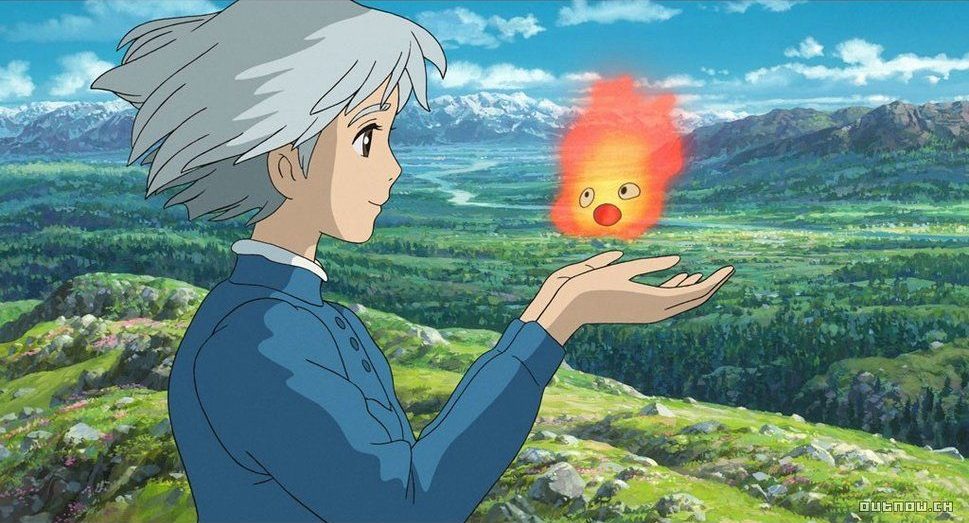
While I was watching the movie, I couldn’t help but form a ‘directional statement’ in my mind; HMC shows how love can be a medium for self-discovery, and shows this through multiple relationship developments as the story progresses. With Sophie as our ever-tenacious, strong female-lead, her relationships with Markl, Turnip-Head, Calcifer, and—last but not least—Howl.

Admittedly, not all of my points are very deep or solid, but this is more of a thought dump of everything I noticed (´◡`) I think it might be because as a children’s or family movie, some points have to be a bit obvious to drive home the message.

Markl

Throughout the movie, Markl puts on a disguise when he deals with strangers and customers. His first interaction with Sophie is also quite prickly, as he is annoyed she found her way into the castle. But he slowly warms up to Sophie as they start to take care of the castle together. We don’t know much of Markl’s background, so we don’t really know why he came to be an apprentice under Howl, just that he’s currently trying to improve his magic. During the climax of the movie, he hugs Sophie tightly, saying “I love you Sophie, Please don’t go!” While he says this, his disguise disappears. I interpreted this as because he is comfortable around Sophie enough to show his true self and feelings. Of course, he is usually in his true form around Sophie anyways, but I think this is symbolic regardless (´◡`)

Turnip-Head

Our gentlemanly turnip-headed-scarecrow doesn’t have a huge amount of interactions with Sophie, but they’re all distinct in strengthening their relationship. He finds his true self quite literally, after he turns back into his human, princely form at the end of the movie. We’re first introduced to him as Sophie pulls him upright from bushes on her way to find Howl. He can’t talk, and his ever present grin is just the smallest amount of unsettling, but we quickly become endeared to him as he brings Sophie a cane for her travels. Through the movie, he continues to help Sophie, and becomes part of the HMC family. You could say that on a very basic level, his love for Sophie helped him find himself again (after her ‘true love’s kiss, he transforms). I like to imagine that past that surface level analysis, our turnip-headed prince found himself through his actions to help the group throughout the film.

(Also, can we take a moment to appreciate how he understands and accepts Sophie’s affections lie elsewhere? And leaves back for his kingdom gracefully? More people should learn from him (´◡`) )

Calcifer

With Calcifer and Sophie, I honestly don’t have many points leading back to my directional statement, but their relationship is so funny and wholesome that I just had to include them. Although we are given hints throughout the movie, we find out Calcifer is actually Howl’s heart near the end. But we still see the growing attachement he has towards Sophie—she’s the only other person other than Howl that he listens to. This can be chalked up to him literally just being a part of Howl, but its sweet regardless when Sophie kisses him and he returns back to his true form as a fallen star. So… another very physical show of self discovery (´◡`)

Howl

Howl’s changes are also physical, in addition to Sophie’s interactions with Calcifer when you consider him a part of Howl. As Howl and Sophie get to know and care for eachother, his ‘mysterious’, ‘otherworldly’ mask fades away into something much more human. When Sophie cleans and organizes the castle bathroom, Howl accidentally uses the wrong hair product; this eventually turns his hair black. When I watched the movie, I assumed that this could be a nod back to Howl’s natural hair colour—a sign that he was finally revealing his true self.

What I found harder to explain to myself was Howl’s transformation into his monstrous, bird-like form. Whenever he transforms, he loses a bit more of his humanity, and it become harder for him to turn back. Is this something that Howl accepts as part of himself to help in the war? Does it reflect the negative results he internalizes when offering his generosity to the world? His true self—his kindness and will to protect the places and people that he loves—manifests as an eerily beautiful transfiguration.

Maybe it brings out a strong message that everything about our true selves isn’t always good…and that’s okay (´◡`)

Bonus: Sophie

I think Sophie is one of the strongest, most self-assured female leads I have ever seen in a movie or a book. I love how she takes everything in stride and is very logical about the curse set on her. Although it isn’t explicit, I think Sophie and her love for others + herself transforms her back to her original appearance by the end of the movie. Her love for Howl is the major reason the movie points to, but I like to think that her personal journey through this movie also played a part in it.

And that concludes my thought dump about HMC.
 If you read until the end... thanks! (´◡`)