Posted in Home, Medicine, Study Corner

Frontiers of Adolescent Scoliosis Care – What’s the Motion?

Check out this podcast episode where we had the opportunity to speak to pediatric orthopedic surgeon Dr. Kevin Smit about Vertebral Body Tethering (VBT) as an exciting new treatment opportunity for Adolescent Idiopathic Scoliosis (AIS)!

The conversation centers around AIS, which is an abnormal curvature of the spine with no known cause, and can have a significant impact on the lives of its young patients. Dr. Smit is a part of inspiring new research on VBT, a developing treatment that could help preserve patient mobility while correcting the curve. Here, we discuss AIS and its impact, Dr. Smit’s recent collaborative pilot study on VBT, and what makes VBT such a unique and promising treatment.

To read his full study, click here. To listen to the podcast, see the Spotify link below or click here to listen to it on the BEaTS Radio podcast website!

Note: This video is a group assignment for the class TMM4950 – all the groups are in friendly competition for streams! While it’s not the usual content I post on my blog, I think it’s an interesting and fun podcast to share. Hope you enjoy!

Posted in Home, Medicine, Study Corner

The Miracle of ZOLGENSMA: Treating Spinal Muscular Atrophy

Zolgensma is a miracle drug that helps treat infants with spinal muscular atrophy (SMA) with just one dose – check out this video that I helped make to learn more!

Approved by the FDA in 2019 and Health Canada in 2020, Zolgensma is a revolutionary therapeutic innovation that has helped save many children around the world. With further research into drug development and patient care, its potential in future medical use is extraordinary.

Note: This video is a group assignment for the class TMM3104 – all the groups are in friendly competition for views! While it’s not the usual content I post on my blog, I think it’s an informative and cute info-vid to share. Hope you enjoy!

Posted in Brainology, Home, Medicine

Why You Should Be Careful of Too Much Stress: The Slow Killer and it’s Effects on the Brain

Photo Credit: Photo by Tim Gouw on Unsplash

“Stress isn’t always a bad thing; it can be handy for a burst of extra energy and focus, like when you’re playing a competitive sport or have to speak in public. But when it’s continuous, it actually begins to change your brain. Chronic stress, like being overworked or having arguments at home, can affect brain size, its structure, and how it functions, right down to the level of your genes.”

Madhumita Murgia, TED-Ed

We don’t like stress, but sometimes it is necessary to finish our work quickly and efficiently. Sometimes that stress about leaving the candle on back at home can drive you to go back and check, which can prevent a horrific disaster.

But most of the time these days, our fast-paced world solicits more stress from us than what we actually need. And here are 3 different ways that it is ruining our brains:

1. Stress can lead to mental illness

I’m sure that it is no surprise that the more stress you have, the crankier your brain gets. You can feel it yourself. Sometimes chronic stress can lead to depression, anxiety, Alzheimer’s and more. You feel down, forget things, and perhaps even feel irritable. But what’s the brain chemistry behind this issue?

Once the neurotransmitters have been released in the brain (ex. GABA, )  norepinephrine, dopamine, serotonin) within seconds of any sign of a stressor, the stress hormone comes into play: cortisol. Too much cortisol over a long period of time can affect the amygdala. It then affects electric signals in the hippocampus, which would effect short and long term memory (pointing us to dementia), as well as emotions and learning skills. All together, it makes life for you and your brain harder, thus leading some people into a dark state of mind. Of course, scientists are trying to find direct links of stress to mental illness in the brain’s chemistry, and studies are coming out with new results every year.

2. Stress changes the shape and structure of your brain

Yup, you read that right — stress can change the physical aspect of the brain. We usually only ever relate the brain to mental topics, but the we need to remember that everything is happening chemically. And that affects things physically as well.

Chronic stress makes cells produce more myelin, which can damage the white matter and gray matter in your brain. Different parts of your brain start to degenerate much earlier in your life.

Finally, according to Madhumita Murgia on TED-Ed, as well as top researchers from Yale University, high levels of cortisol for prolonged periods of time result in the shrinking of the prefrontal cortex — the part of the brain responsible for decision making, attention-span, recognition, and some emotions. As neural connections start to die out, gray matter shrinks.

3. Brain cells are killed

This goes hand in hand with the other two ways that stress harms he brain. In fact, it is all interconnected. When our brain produces too much cortisol, it disrupts many functions. It eventually leads to killing off brain cells. These are our longest living cells in the body, so we need to take care of them.

So is there any way to stop it?

This may sound pretty scary, but stress is normal (just not high amounts). Stress motivates you to study for a test. It tells you not to procrastinate. So follow that little inkling before it spirals out of control. If you’re scared of stress, and what it entails, try to look at it in a positive light. Turn that evil stress into good stress!

Watch this TED-Ed talk: How to Make Stress Your Friend by Kelly McGonigal

Want to relieve bad stress? Here re some things that you can do to help make you feel better (not in order):

  • Exercise: It releases your happy hormones! It also improves other aspects of your brain, including memory.
  • Meditate: This calms you down and relaxes your mind. It can totally relieve stress if you are committed to it. Meditation is becoming very popular these days, and it’s health benefits are backed up by countless researchers.
  • Enjoy nature: Nature just makes us feel good! There’s also a scientific reason behind that — nature has many negative ions that clear the air and boost our positive energy (of course, there are whole chemical processes that explain why that happens).
  • Listen to music: Whether you like classical music or pop, sit back and chill to your favourite songs. It will make you feel at home and may even boost your energy (although if you want to calm down and relieve stress, classical music is the way to go).
  • Sleep: When you sleep, the brain flushes out toxins and prepares for the next time you’re awake. Sleeping can help put you back on the right track when you wake up.
  • Do a hobby: Whether its drawing, writing, reading, or binge-watching Netflix, it can calm you down after a stressful day at work or school. However, I would recommend a constructive hobby so that you don’t get mad at yourself for wasting your time afterwards, and consequently get more stressed.
  • Talk to a family member or friend: Sometimes, we can’t get rid of our stress all on our own. So talk to a friend or family member to help!

I hope you learned something from this Brainology post. And you know what they all say: don’t let stress weigh you down. Take control of your life. Be happy!

Sources:

How stress affects your brain – Madhumita Murgia
verywell mind – 5 Surprising Ways That Stress Affects Your Brain
Tuoro University Worldwide – The Mind and Mental Health: How Stress Affects the Brain

Posted in Body Systems, Home, Medicine, The Circulatory System

The Beauty of Blood Types

Source: Shutterstock

I never really paid much attention to blood types… I don’t even know my own! But it was interesting to me how some blood types could be universal donors, while others could not. So I decided to take a look into it and provide my insights on them, as well as a quick explanation on what they actually are.

Why do we even have ‘blood types’? Scientists think that we evolved with different blood types to fight off different types of diseases, and it happened through genetic mutations. It is most widely presumed that a long time ago, people in different parts of the world were subject to different bacteria and viruses; hence, their bodies developed ways to become immune to them. One of these ways was the blood type.

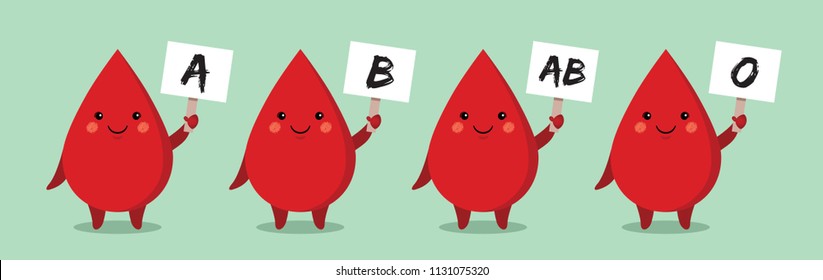
We have four types of blood groups. A, B, AB, and O, and there are two factors that make blood groups different from each other: antigens and antibodies. To make it simpler, I can condense this into a few statements:

Antigens

  1. There are 2 types of antigens — A and B
  2. Group A has A antigens
  3. Group B has B antigens
  4. Group AB has both antigens
  5. Group O has neither of the antigens

Antibodies

  1. There are 2 types of antibodies — anti-A and anti-B
  2. Group A has anti-B antibodies
  3. Group B has anti-A antibodies
  4. Group AB has neither of the antibodies
  5. Group O has both antibodies.

But have you ever seen a + or – sign at the end of the blood grouping? That denotes the Rh factor in the blood. Rh is a another antigen; but unlike A and B antigens, it is a protein. A + means Rh is present, and a – means it is not.

As you may have already guessed by now, A and B antigens are sugars that make your immune system to respond to bacteria, etc. and antibodies are what make blood types reject select other blood types. To put it simply, the body creates antibodies for antigens that you do not have.

This is why we can never mix blood types that do not have the same antigens. (Doctors learned that the hard way.)

If this happens, the antibodies in your blood will destroy the new blood cells. This is called an ABO Incompatibility Reaction. For example, if a type B person is given type A blood, the anti-A antigens in the B blood will destroy the A blood. So we need two other lists that expands on our statements above:

Receiving Blood

  1. Type A (anti-B) can receive blood from A and O types
  2. Type B (anti-A) can receive blood from B and O types
  3. Type O (anti-B and anti-A) can only receive blood from O types
  4. Type AB (no antibodies) is the Universal recipient. I can receive blood from all types.

Giving Blood

  1. Type A (A antigen) can give blood to type A and type O
  2. Type B (B antigen) can give blood to type B and type O
  3. Type O (no antigens) is the Universal Donor. It can give blood to all types.
  4. Type AB (A and B antigens) can only give blood to type AB.

Two charts are not needed to understand both processes (because they are just from two perspectives of the same occurrence). But it does make it easier!

Just to reiterate, somebody can receive blood that has the same or no antigens as them. That will ensure that there are also the same antibodies. somebody can give blood if they have the same antigens as the other type (to ensure that the antibodies do not clash).

If two types of blood are mixed, the blood clumps (agglutinates). The person also shows many symptoms: fever, nausea, pain, aches, etc. The blood clots can clog arteries, which in turn cuts off the blood supply to vital organs. Destroyed blood cells can also damage the kidney. So, if not treated immediately, an ABO Incompatibility reaction can lead to death.

And that’s why it is so important to learn about blood types! Of course, doctors take care of this problem, but it is important to be aware of your own health and safety.

Remember, your knowledge of blood types will never be in vein!

Citations:

healthline – ABO Incompatibility Reaction

Aggarwal, S. K. Learning Elementary Biology for Class 8 (for ICSE Schools). Goyal Brothers Prakashan, 2015.

Check Out

Canadian Blood Services (for Canadian statistics on blood types)

Posted in Genetics, Home, Medicine

Chimeras: No, not the Greek monster

Source: futurism.com

You’ve probably seen the above picture before — it’s one of Venus the cat, an animal that became famous because of their unique outward appearance. But what if I told you that there was a specific name for this abnormality, and that it’s much more common than you think it is (though not as obvious)?

The name for this is ‘Chimera’ — no, it’s not the one in the Greek myth, but that’s what it’s named after. Chimeras happen when a single living thing is made up of DNA from two different biotic elements.

Now, you might be wondering: isn’t that what happens anyways? You get genes from your mom and your dad? But there’s more to this than that. It’s when there are two different types of DNA programmed to create two different organisms.

There are many different types of human chimeras, but professionals speculate that the most typical ones are formed when they are in the mother’s womb. If a mother is carrying twins, they may end up merging into one child. This is called a dispermic chimera. This child may have different colored eyes, hair, different blood types, and possibly different gendered parts.

Other types of human chimeras are microchimeras and androgenetic chimeras. Microchimeras are not well understood, but they can happen during blood transfusions and pregnancy. A few cells from another person travel into the host’s body. This can be both good and bad. It can be good when a person’s organ is damaged and their cells can’t repair it — then the alien cells may do it for them. But it may be bad because it can increase the risk of autoimmune diseases. This doesn’t create another human, it just changes a preexisting one.

Androgenetic chimeras occur when a fetus has cells with female and male chromosomes, but it also has male-male chromosomes. They may not ever be born because of complications, and may die in the womb. If they are born, they usually experience many disorders.

Human chimeras are way more common than scientists initially thought, and this poses as a problem in some cases. For example, it would be hard to identify a child’s mother if that mom was genetically two people. And if somebody commits a crime, DNA testing wouldn’t identify them if the second, alternate DNA type was the one found at the crime scene. Different blood types are also mixed together.

And did you know that regular cells can start chimeras too?! If one cell splits, it makes another cell, right (let’s name it cell B)? So if a whole group of cells splits and splits from cell B, it is totally different from the other cells in your body! Cool, right? This happens all the time, and usually doesn’t show any effect. But some of the most dangerous chimeric cells are those that we call ‘cancer’. They’re different from the rest, and they split at a faster rate. It is disastrous in some cases.

Finally, this opens up a whole new window for genetic modification. Animal-human hybrids, and i daresay plant-animal hybrids? The possibilities are endless. And dangerous. There are hundreds of scientists right now debating the ethicality of these experiments.

What can I say? This topic is taking up the science world in a cy-clone! (Haha, get it?)

For more information, see: Could You Be a Chimera? by It’s Okay to Be Smart For an interesting real-life case, see: The first Human-Pig Chimeras by SciShow

Posted in Body Systems, Home, Medicine, The Circulatory System

Circulatory System: The Heart

This is the first in hopefully a long series of posts about the human body. I hope for it to be an easy and comprehensive guide to help understand the wonders of our body. I’m starting with the circulatory system (my favorite!) and today we are going to focus on the heart. Since it is such a big topic, we are going to split it up into two posts. This one will focus on the structure and the functions of the different chambers.

The heart is arguably the most important muscle in the human body. It pumps our life giving fluid (blood) to all of the corners of the body. On average, an adult’s bpm (beats per minute) is 60 to 100 beats, while for a child it is between 70 – 100 (livescience.com). But what really goes on behind the scenes when this is happening?

The Structure of the Heart

Diagrams are really helpful, but sometimes it is hard to understand them just from the pictures and labels themselves. That is why I’m here!

The heart is only as big as an average fist, and it only weighs around a pound. Despite this, it is one of our strongest muscles. It will be interesting to see how the human body evolved to develop such an intricate sturdy body part. Let’s get right to it!

The heart resides between the two lungs and above the diaphragm, inside the ribs. many people believe that it is placed in a straight position. However, the apex (bottom tip) of the heart, is tilted to the left direction. Hence part of the reason we say the the heart is on the ‘left’ side of our bodies.

The pericardium is the outermost part of the heart. It has two walls, and acts like a ‘bag’ for the heart. The outer fibrous pericardium protects the heart and attaches the heart to some of the other surrounding body parts (such as the previously mentioned diaphragm). The inner part of the wall is the serous pericardium, and it is further divided into two parts. The parietal layer attaches itself to the main, big arteries. After doing that, it goes back over the heart, and we call this the visceral layer/epicardium. The serous fluid is produced by pericardial membranes to reduce friction between layers.

The next layer is the myocardium. Unlike the pericardium, it is mostly composed of cardiac muscle. It is twisted into a pattern to become strong and dense. It must be, because this part of the heart is what actually contracts. Bands of collagen connective tissue further reinforce this layer. It has been nicknamed the ‘skeleton of the heart’.

Finally, the endocardium is an endothelium lining that lines the blood vessels. It is thin compared to the other layers, but it is thicker in the atria than in the ventricles.

The main heart structure inside of our heart is the interventricular septum. It separates the left and right side of the heart.

The Four Chambers and Their Functions

The heart is made of cardiac muscles which contract and expand using electric energy pulses from the body. There are mainly four parts: the left atria, the right atria, the left ventricle, and the right ventricle. The right side is responsible for pumping to the lungs (pulmonary circuit), while the left side is responsible for pumping to the body (systemic circuit). Also, as you can see, the ventricles are significantly larger than the atria. This is because that the ventricles are the ones actually pumping. When they contract, the blood rushes out of the heart into the arteries. A useful analogy would be squirting water out of a water balloon.

Now, let us move onto the functions: The right atrium receives the oxygen-poor blood of the body from the superior and inferior venae cavae and sends the blood to the right ventricle. The right ventricle then pumps the blood to the lungs for oxygenation through the pulmonary trunk, which later ranches off into the pulmonary arteries.

Quick Bits: Oxygenation As we are talking about this, it is crucial to give a slight overview on the process of oxygenation: it is a process where the blood moves through the small sacs in the lungs called alveoli. Oxygen molecules attach themselves to proteins (hemoglobin) in the red blood cells. Hemoglobin is essentially what bring the oxygen all around the body with them, keeping us alive.

Now, back to the heart. After oxygenation, the oxygen rich blood is brought back to the heart by the pulmonary vein, this time to the left atrium, which pushes the blood to the left ventricle. The left ventricle then pumps it to the aorta to distribute it to the arteries of the body. Finally, oxygen poor blood coming back from body tissues goes back to the heart through the superior or inferior venae cavae.

The Valves of the Heart

There are four valves in the heart to make sure that the blood only flows in one direction: from the atria to the ventricles. Imagine the mess if it suddenly started going the other way around!

The first set of valves are the atrioventricular (AV) valves. The left bicuspid/mitral valve has two flaps made of endocardium. The right tricuspid valve has three flaps. Both of the valves have chordae tendineae that attach the to the walls of the heart. These valves don’t do anything when the heart is filling up with blood. However, when the ventricles contract to push blood out, pressure makes the flaps close. This prevents the blood from going back up to the atria.

The second set of valves are the aortic and pulmonary semilunar valves. These are found at the base of important arteries that blood leaves through from the ventricles. Each valve has three flaps. The flaps open from the pressure of the blood when the ventricles are contracting. This pushes them against the walls of the arteries to let blood flow past. They close again when the ventricles relax.

Summary:

  • The heart is placed between the lungs, above the diaphragm, inside the ribs.
  • The heart has three main layers: the pericardium, myocardium, and endocardium.
  • The heart has 4 main chambers: the left and right atria that bring blood in, and the left and right ventricles that pump blood out.
  • The left side of the heart is part of the pulmonary circuit (focused on the lungs) and the right side of the heart is part of the systemic circuit (focused on the rest of the body)
  • There are two sets of valves: the atrioventricular valves that protects the flow of blood from going from the ventricles back into the aria, and the semilunar valves that open only when blood is being pumped from the ventricles to the main arteries (when the heart contracts).

Looking ahead: NEXT — Cardiac circulation, heartbeats, and electric pulses.
Posted in Brainology, Home, Medicine

Corporate Psychopathy: It’s more common than you think

When I first heard the words ‘corporate psychopathy’, I was intrigued. Psychopathy is one of the most feared mental disorders of the modern world, yet the thought of corporations doesn’t lead anybody to bat an eye. So what is it? To put it simply, corporate psychopathy is that feared mental disorder, but it appears in people as it begins to benefit their work life.

To identify corporate psychopaths, we first need to learn about the general disorder first. The definition of psychopathy is “a mental condition characterized by a deficit of emotional processing, interpersonal relationships and self-regulation.” This means that psychopaths can seem fine when you first see them, but they have shallow feelings. They usually manipulate people to get what they want, and can’t form strong ties with anybody, although it manifests in different people in different ways. Some of them tend to come off as narcissistic: very charming and and over-confident.

  • Psychopaths make up around 1% of the world’s population (livescience)
  • 15%-25% of people in prison meet the criteria of being a psychopath (Psychology Today)

Ok… so now we know what psychopaths are like. Chances are that you’ve met some in real life! Not all of them are dangerous, but we can see a big correlation with criminals and psychopathic minds. This is because major, multi-offence criminals have a ‘job’ that benefits from this disorder: they must be cunning, good con-artists, and be a smooth speaker. Last but not least, they can’t hold ties with anybody (people will usually weigh them down).

Wonder why I’m telling you this? Well, think about it: don’t these characteristics also benefit businessmen? They need to seem calm and collected to their clients, and their main goal is to get a deal that helps them more than it does the other party. If a businessman does their job well, they are most likely ticking off the boxes of this mental disorder.

Some psychopaths can’t control their behaviors, and take their actions too far. But those that can withhold themselves make excellent bosses at work. These behaviors reward them at work, most likely translated into money and stocks. Corporate psychopaths also tend to be harder on they colleagues and workers, because they do not have a ‘regular’ human conscience.

The corporation, like the psychopathic personality it resembles, is programmed to exploit other people for profit.

– Joel Bakan

What other disorders are found in business places? The two other most common personality disorders are Machiavellianism and narcissism. The same personality cannot have both narcissism and psychopathy. This is because a narcissist’s confidence and charm comes from their need for human interaction and experience those emotions. Psychopaths only behave like that for their personal gain. Meanwhile, Machiavellianism is directed to this world’s big leaders in particular: it is when a person manipulates or exploits another to achieve their goals (mainly for political gain). Unlike narcissism, Machiavellianism can co-exist in a personality with psychopathy. All together, these disorders are called the ‘Dark Triad’.

While psychopaths are found as 1% of the world’s population, that number rises to around 4% in bosses, businessmen, and CEOs. Other studies suggest that it actually rises to 21%!

So what should we all take away from this? Well, psychopathy has been subconsciously normalized in our society. Those that have it can benefit greatly. We hear the word and get chills, but the characteristics themselves are so common that sometimes its hard to distinguish from everyday life. When is the last time that you tricked someone into getting what you wanted? Promising that you’ll do something for them next time? (like that last pizza slice you got at the party) But don’t worry, this doesn’t make you a psychopath — it’s just regular human behavior. Basically, we do what it takes to survive: and if psychopathic tendencies help people survive in the business world? Well, what can we say? That’s how the world is. Sigh.

For another take on this subject, see this amazing Ted-talk by Jon Ronson: Strange Answers to the Psychopath Test

Posted in Brainology, Home, Medicine

The Neuroscience Behind Multilingualism

Some people only know their mother-tongue. Others know ten languages. But regardless of how many, everybody has learned one (reading, writing, speaking, and/or gesturing). But what does it do to your brain? To your psyche? Knowing different languages can be way different from playing different instruments, or memorizing all the math formulas. So sit down and buckle in while I take you on one-head of a ride through this concept!

Arrival

Funny enough, the first thing that got me thinking about this topic was the 2016 movie called Arrival. In a nutshell, a woman needs to learn an alien language after a few land on Earth so that world leaders don’t attack them. Pretty cool, right? But the interesting thing about this movie is that it showed what it did to this woman’s mentality. Because the alien language had a totally different structure of language than anybody had ever seen before, it completely changed her way of thinking. Timelines in her mind were no longer past, present, and future: she experienced them all in the present. But could this theoretically happen in real life, or is it just well thought out science-fiction?

The Sapir-Whorf Hypothesis

Basically, the movie showcases an interesting phenomena called the ‘Sapir-Whorf Hypothesis’. It says that speaking in one language can make you think differently than when you are using another. On the surface, this makes sense: we have different words and different cultures associated, so of course it shouldn’t all be the same. But many people disagree on this because it challenges the way we interact with the world and each other: we translate languages all the time, yet we can still communicate fine. However, I believe that many things can be lost in translation.

This hypothesis has also been dubbed as linguistic relativity, which better explains this: a person’s thoughts and worldview is relative to the language and how it is used. A famous example is one of the Inuktitut and the English language. In English, we only have one word for snow. Yet in Inuktitut, a language that formed in the north, they have 40-50 words for snow, all for a specific type.

So how does this affect the brain?

Believe it or not, being multilingual can change the actual structure of the brain! It also has some additional benefits, and being multilingual changes the way a person processes information.

Knowing/learning a second language can lead too more grey-matter in your left inferior parietal cortex. (near the back of the brain). Using more tan one language is more cognitively challenging, so specific areas of the brain must strengthen themselves and their connections to other parts of the whole structure. I can also increase the white matter (connecting gray matter, the path between the neurons) for the same reason.

The way the these brains work is different as well. They have a heightened cognitive ability, and it is active even when no language is involved. The sensitivity to auditory stimuli also rises, so they can process their surroundings better. Multilingual also have better creative problem solving skills because they have already trained their brains to think in different way from all the different languages. They are also better at multitasking and have a longer concentration span than others. Their brains are truly wired differently!

More benefits of being multilingual are staying mentally healthy into old age, better decision-making skills, and helping in all other areas of learning.

From the psychological to the neurological perspective, the science of languages never cease to amaze me!

For more information, see: The benefits of a bilingual brain – Mia Nacamulli (Ted-Ed) and How language shapes the way we think, by Lera Boroditsky (Ted Talk)