I feel like this is an especially important topic, even more so now because it is summer.
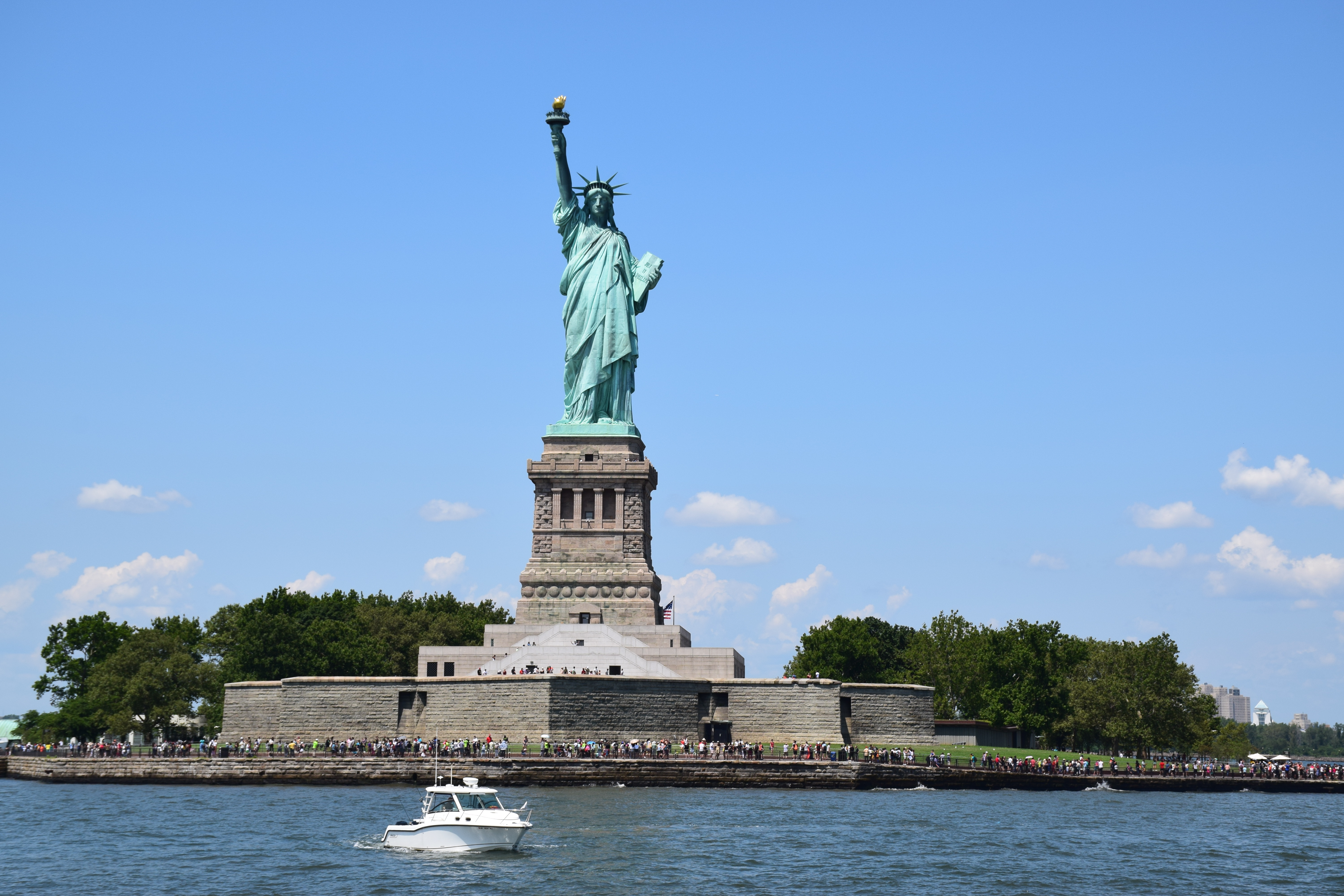
I recently came back from a vacation, and it was really nice. I toured much of the U.S. and got to see some big cities like New York, Boston, and Washington D.C. I think my favourite part was visiting the capital, because I like visiting old monuments and museums (which there are a lot of in D.C.)
But sometimes, vacations don’t always work out they way you want them to. This is mostly because a lot of people don’t actually ‘leave’ their work lives behind. They bring their work with them physically — or they are always thinking about it. They keep on remembering the pile of work they have to do at home and consequently do not enjoy the vacation.
Another reason is having a full ‘vacation schedule’. I love to go see new things. But I would rather see five new things in one day rather than twenty. Sometimes we keep the schedule so full with our to-do list that it just starts to feel like another checklist in your everyday life. Taking time off to just relax during the vacation is just as important. Stay in bed, watch TV, or wander around the beach. Weave through gift shops and neighborhood stores aimlessly.
This isn’t to say that you can’t have a full schedule. Some people like that more than not planning their day. And that’s totally okay! I couldn’t have seen all the things in the U.S. if I hadn’t gotten up early in the morning and went out. But we get tired driving hours upon hours to the next town, and walking to different sites. In the future, I would like to have at least one day where I can go out and just explore with no time restraints.
So, for a fulfilling vacation, here are a few things to keep in mind:
Try and live in the moment. Don’t think about your work or the other things you have to do when you get home. You’ll get to that when the time comes.
If you absolutely have to work during the vacation, don’t stress about it all day. Rather, set a specific time frame where you will work, and enjoy your vacation without stressing for the rest of the day.
Know how much travelling in one day is best for you. Every person has their own needs, and some days are better than others. Don’t push yourself too hard to see 20 things in one day. Sometimes you just have to take back a step and enjoy your immediate surroundings for a day (for example, don’t try and tour all of Toronto and Ottawa in one day if your body isn’t up to it).
I never really paid much attention to blood types… I don’t even know my own! But it was interesting to me how some blood types could be universal donors, while others could not. So I decided to take a look into it and provide my insights on them, as well as a quick explanation on what they actually are.
Why do we even have ‘blood types’? Scientists think that we evolved with different blood types to fight off different types of diseases, and it happened through genetic mutations. It is most widely presumed that a long time ago, people in different parts of the world were subject to different bacteria and viruses; hence, their bodies developed ways to become immune to them. One of these ways was the blood type.
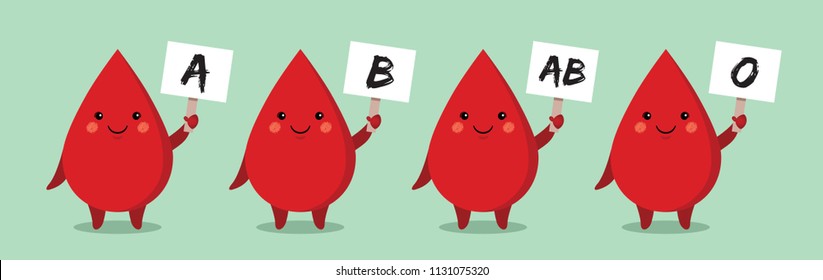
We have four types of blood groups. A, B, AB, and O, and there are two factors that make blood groups different from each other: antigens and antibodies. To make it simpler, I can condense this into a few statements:
Antigens
There are 2 types of antigens — A and B
Group A has A antigens
Group B has B antigens
Group AB has both antigens
Group O has neither of the antigens
Antibodies
There are 2 types of antibodies — anti-A and anti-B
Group A has anti-B antibodies
Group B has anti-A antibodies
Group AB has neither of the antibodies
Group O has both antibodies.
But have you ever seen a + or – sign at the end of the blood grouping? That denotes the Rh factor in the blood. Rh is a another antigen; but unlike A and B antigens, it is a protein. A + means Rh is present, and a – means it is not.
As you may have already guessed by now, A and B antigens are sugars that make your immune system to respond to bacteria, etc. and antibodies are what make blood types reject select other blood types. To put it simply, the body creates antibodies for antigens that you do not have.
This is why we can never mix blood types that do not have the same antigens. (Doctors learned that the hard way.)
If this happens, the antibodies in your blood will destroy the new blood cells. This is called an ABO Incompatibility Reaction. For example, if a type B person is given type A blood, the anti-A antigens in the B blood will destroy the A blood. So we need two other lists that expands on our statements above:
Receiving Blood
Type A (anti-B) can receive blood from A and O types
Type B (anti-A) can receive blood from B and O types
Type O (anti-B and anti-A) can only receive blood from O types
Type AB (no antibodies) is the Universal recipient. I can receive blood from all types.
Giving Blood
Type A (A antigen) can give blood to type A and type O
Type B (B antigen) can give blood to type B and type O
Type O (no antigens) is the Universal Donor. It can give blood to all types.
Type AB (A and B antigens) can only give blood to type AB.
Two charts are not needed to understand both processes (because they are just from two perspectives of the same occurrence). But it does make it easier!
Just to reiterate, somebody can receive blood that has the same or no antigens as them. That will ensure that there are also the same antibodies. somebody can give blood if they have the same antigens as the other type (to ensure that the antibodies do not clash).
If two types of blood are mixed, the blood clumps (agglutinates). The person also shows many symptoms: fever, nausea, pain, aches, etc. The blood clots can clog arteries, which in turn cuts off the blood supply to vital organs. Destroyed blood cells can also damage the kidney. So, if not treated immediately, an ABO Incompatibility reaction can lead to death.
And that’s why it is so important to learn about blood types! Of course, doctors take care of this problem, but it is important to be aware of your own health and safety.
Remember, your knowledge of blood types will never be in vein!
Rain usually makes me feel happy, but it’s always related to sad things. Sometimes, I just don’t understand why. When I was a kid, rain meant jumping in puddles and using my favourite umbrella. But as I grew up, I saw rain getting more frequently used as a symbol for sadness, depression, anger, death, etc. Where did all of the rain lovers go?
As a writer, I’m guilty of portraying rain as a sign of bad events. I’ve related it to death as well, and it always seems to…fit. Maybe its because of the blockage of the sun and a lack of light, but its a great metaphor. But I haven’t come to terms with how I perceive rain yet.
Perhaps rain is both good and bad — just like how the same person, or event, can make you feel happy and sad. I’ve realized that I can’t remain as the kid in the yellow rain jacket jumping in puddles — I have to learn to look at how to improve things in my life as well.
Coming back to rain: if you’re someone that despises rain, and have a good reason for it, that’s fine! But if you want to try something new, try taking a walk in the rain. Maybe jump in some puddles! Rain calms me, and the sound of it falling helps me focus (it’s a kind of natural ambient sound). Plus, nature and walking are both good things for your body.
This little analogy helped me sort out a few ideas that I usually keep at the back of my mind… I hope that it helped you a bit too!
Stay tuned, and stay happy! : )
This helps me study and sleep!
Some soft music + rain = a great way to relax and study
You’ve probably seen the above picture before — it’s one of Venus the cat, an animal that became famous because of their unique outward appearance. But what if I told you that there was a specific name for this abnormality, and that it’s much more common than you think it is (though not as obvious)?
The name for this is ‘Chimera’ — no, it’s not the one in the Greek myth, but that’s what it’s named after. Chimeras happen when a single living thing is made up of DNA from two different biotic elements.
Now, you might be wondering: isn’t that what happens anyways? You get genes from your mom and your dad? But there’s more to this than that. It’s when there are two different types of DNA programmed to create twodifferent organisms.
There are many different types of human chimeras, but professionals speculate that the most typical ones are formed when they are in the mother’s womb. If a mother is carrying twins, they may end up merging into one child. This is called a dispermic chimera. This child may have different colored eyes, hair, different blood types, and possibly different gendered parts.
Other types of human chimeras are microchimeras and androgenetic chimeras. Microchimeras are not well understood, but they can happen during blood transfusions and pregnancy. A few cells from another person travel into the host’s body. This can be both good and bad. It can be good when a person’s organ is damaged and their cells can’t repair it — then the alien cells may do it for them. But it may be bad because it can increase the risk of autoimmune diseases. This doesn’t create another human, it just changes a preexisting one.
Androgenetic chimeras occur when a fetus has cells with female and male chromosomes, but it also has male-male chromosomes. They may not ever be born because of complications, and may die in the womb. If they are born, they usually experience many disorders.
Human chimeras are way more common than scientists initially thought, and this poses as a problem in some cases. For example, it would be hard to identify a child’s mother if that mom was genetically two people. And if somebody commits a crime, DNA testing wouldn’t identify them if the second, alternate DNA type was the one found at the crime scene. Different blood types are also mixed together.
And did you know that regular cells can start chimeras too?! If one cell splits, it makes another cell, right (let’s name it cell B)? So if a whole group of cells splits and splits from cell B, it is totally different from the other cells in your body! Cool, right? This happens all the time, and usually doesn’t show any effect. But some of the most dangerous chimeric cells are those that we call ‘cancer’. They’re different from the rest, and they split at a faster rate. It is disastrous in some cases.
Finally, this opens up a whole new window for genetic modification. Animal-human hybrids, and i daresay plant-animal hybrids? The possibilities are endless. And dangerous. There are hundreds of scientists right now debating the ethicality of these experiments.
What can I say? This topic is taking up the science world in a cy-clone! (Haha, get it?)
This is the first in hopefully a long series of posts about the human body. I hope for it to be an easy and comprehensive guide to help understand the wonders of our body. I’m starting with the circulatory system (my favorite!) and today we are going to focus on the heart. Since it is such a big topic, we are going to split it up into two posts. This one will focus on the structure and the functions of the different chambers.
The heart is arguably the most important muscle in the human body. It pumps our life giving fluid (blood) to all of the corners of the body. On average, an adult’s bpm (beats per minute) is 60 to 100 beats, while for a child it is between 70 – 100 (livescience.com). But what really goes on behind the scenes when this is happening?
The Structure of the Heart
Diagrams are really helpful, but sometimes it is hard to understand them just from the pictures and labels themselves. That is why I’m here!
The heart is only as big as an average fist, and it only weighs around a pound. Despite this, it is one of our strongest muscles. It will be interesting to see how the human body evolved to develop such an intricate sturdy body part. Let’s get right to it!
The heart resides between the two lungs and above the diaphragm, inside the ribs. many people believe that it is placed in a straight position. However, the apex (bottom tip) of the heart, is tilted to the left direction. Hence part of the reason we say the the heart is on the ‘left’ side of our bodies.
The pericardium is the outermost part of the heart. It has two walls, and acts like a ‘bag’ for the heart. The outer fibrous pericardium protects the heart and attaches the heart to some of the other surrounding body parts (such as the previously mentioned diaphragm). The inner part of the wall is the serous pericardium, and it is further divided into two parts. The parietal layer attaches itself to the main, big arteries. After doing that, it goes back over the heart, and we call this the visceral layer/epicardium. The serous fluid is produced by pericardial membranes to reduce friction between layers.
The next layer is the myocardium. Unlike the pericardium, it is mostly composed of cardiac muscle. It is twisted into a pattern to become strong and dense. It must be, because this part of the heart is what actually contracts. Bands of collagen connective tissue further reinforce this layer. It has been nicknamed the ‘skeleton of the heart’.
Finally, the endocardium is an endothelium lining that lines the blood vessels. It is thin compared to the other layers, but it is thicker in the atria than in the ventricles.
The main heart structure inside of our heart is the interventricular septum. It separates the left and right side of the heart.
The Four Chambers and Their Functions
The heart is made of cardiac muscles which contract and expand using electric energy pulses from the body. There are mainly four parts: the left atria, the right atria, the left ventricle, and the right ventricle. The right side is responsible for pumping to the lungs (pulmonary circuit), while the left side is responsible for pumping to the body (systemic circuit). Also, as you can see, the ventricles are significantly larger than the atria. This is because that the ventricles are the ones actually pumping. When they contract, the blood rushes out of the heart into the arteries. A useful analogy would be squirting water out of a water balloon.
Now, let us move onto the functions: The right atrium receives the oxygen-poor blood of the body from the superior and inferior venae cavae and sends the blood to the right ventricle. The right ventricle then pumps the blood to the lungs for oxygenation through the pulmonary trunk, which later ranches off into the pulmonary arteries.
Quick Bits: Oxygenation As we are talking about this, it is crucial to give a slight overview on the process of oxygenation: it is a process where the blood moves through the small sacs in the lungs called alveoli. Oxygen molecules attach themselves to proteins (hemoglobin) in the red blood cells. Hemoglobin is essentially what bring the oxygen all around the body with them, keeping us alive.
Now, back to the heart. After oxygenation, the oxygen rich blood is brought back to the heart by the pulmonary vein, this time to the left atrium, which pushes the blood to the left ventricle. The left ventricle then pumps it to the aorta to distribute it to the arteries of the body. Finally, oxygen poor blood coming back from body tissues goes back to the heart through the superior or inferior venae cavae.
The Valves of the Heart
There are four valves in the heart to make sure that the blood only flows in one direction: from the atria to the ventricles. Imagine the mess if it suddenly started going the other way around!
The first set of valves are the atrioventricular (AV) valves. The left bicuspid/mitral valve has two flaps made of endocardium. The right tricuspid valve has three flaps. Both of the valves have chordae tendineae that attach the to the walls of the heart. These valves don’t do anything when the heart is filling up with blood. However, when the ventricles contract to push blood out, pressure makes the flaps close. This prevents the blood from going back up to the atria.
The second set of valves are the aortic and pulmonary semilunar valves. These are found at the base of important arteries that blood leaves through from the ventricles. Each valve has three flaps. The flaps open from the pressure of the blood when the ventricles are contracting. This pushes them against the walls of the arteries to let blood flow past. They close again when the ventricles relax.
Summary:
The heart is placed between the lungs, above the diaphragm, inside the ribs.
The heart has three main layers: the pericardium, myocardium, and endocardium.
The heart has 4 main chambers: the left and right atria that bring blood in, and the left and right ventricles that pump blood out.
The left side of the heart is part of the pulmonary circuit (focused on the lungs) and the right side of the heart is part of the systemic circuit (focused on the rest of the body)
There are two sets of valves: the atrioventricular valves that protects the flow of blood from going from the ventricles back into the aria, and the semilunar valves that open only when blood is being pumped from the ventricles to the main arteries (when the heart contracts).
Looking ahead: NEXT — Cardiac circulation, heartbeats, and electric pulses.
When I first heard the words ‘corporate psychopathy’, I was intrigued. Psychopathy is one of the most feared mental disorders of the modern world, yet the thought of corporations doesn’t lead anybody to bat an eye. So what is it? To put it simply, corporate psychopathy is that feared mental disorder, but it appears in people as it begins to benefit their work life.
To identify corporate psychopaths, we first need to learn about the general disorder first. The definition of psychopathy is “a mental condition characterized by a deficit of emotional processing, interpersonal relationships and self-regulation.” This means that psychopaths can seem fine when you first see them, but they have shallow feelings. They usually manipulate people to get what they want, and can’t form strong ties with anybody, although it manifests in different people in different ways. Some of them tend to come off as narcissistic: very charming and and over-confident.
Psychopaths make up around 1% of the world’s population (livescience)
15%-25% of people in prison meet the criteria of being a psychopath (Psychology Today)
Ok… so now we know what psychopaths are like. Chances are that you’ve met some in real life! Not all of them are dangerous, but we can see a big correlation with criminals and psychopathic minds. This is because major, multi-offence criminals have a ‘job’ that benefits from this disorder: they must be cunning, good con-artists, and be a smooth speaker. Last but not least, they can’t hold ties with anybody (people will usually weigh them down).
Wonder why I’m telling you this? Well, think about it: don’t these characteristics also benefit businessmen? They need to seem calm and collected to their clients, and their main goal is to get a deal that helps them more than it does the other party. If a businessman does their job well, they are most likely ticking off the boxes of this mental disorder.
Some psychopaths can’t control their behaviors, and take their actions too far. But those that can withhold themselves make excellent bosses at work. These behaviors reward them at work, most likely translated into money and stocks. Corporate psychopaths also tend to be harder on they colleagues and workers, because they do not have a ‘regular’ human conscience.
The corporation, like the psychopathic personality it resembles, is programmed to exploit other people for profit.
– Joel Bakan
What other disorders are found in business places? The two other most common personality disorders are Machiavellianism and narcissism. The same personality cannot have both narcissism and psychopathy. This is because a narcissist’s confidence and charm comes from their need for human interaction and experience those emotions. Psychopaths only behave like that for their personal gain. Meanwhile, Machiavellianism is directed to this world’s big leaders in particular: it is when a person manipulates or exploits another to achieve their goals (mainly for political gain). Unlike narcissism, Machiavellianism can co-exist in a personality with psychopathy. All together, these disorders are called the ‘Dark Triad’.
While psychopaths are found as 1% of the world’s population, that number rises to around 4% in bosses, businessmen, and CEOs. Other studies suggest that it actually rises to 21%!
So what should we all take away from this? Well, psychopathy has been subconsciously normalized in our society. Those that have it can benefit greatly. We hear the word and get chills, but the characteristics themselves are so common that sometimes its hard to distinguish from everyday life. When is the last time that you tricked someone into getting what you wanted? Promising that you’ll do something for them next time? (like that last pizza slice you got at the party) But don’t worry, this doesn’t make you a psychopath — it’s just regular human behavior. Basically, we do what it takes to survive: and if psychopathic tendencies help people survive in the business world? Well, what can we say? That’s how the world is. Sigh.
Some people only know their mother-tongue. Others know ten languages. But regardless of how many, everybody has learned one (reading, writing, speaking, and/or gesturing). But what does it do to your brain? To your psyche? Knowing different languages can be way different from playing different instruments, or memorizing all the math formulas. So sit down and buckle in while I take you on one-head of a ride through this concept!
Arrival
Funny enough, the first thing that got me thinking about this topic was the 2016 movie called Arrival. In a nutshell, a woman needs to learn an alien language after a few land on Earth so that world leaders don’t attack them. Pretty cool, right? But the interesting thing about this movie is that it showed what it did to this woman’s mentality. Because the alien language had a totally different structure of language than anybody had ever seen before, it completely changed her way of thinking. Timelines in her mind were no longer past, present, and future: she experienced them all in the present. But could this theoretically happen in real life, or is it just well thought out science-fiction?
The Sapir-Whorf Hypothesis
Basically, the movie showcases an interesting phenomena called the ‘Sapir-Whorf Hypothesis’. It says that speaking in one language can make you think differently than when you are using another. On the surface, this makes sense: we have different words and different cultures associated, so of course it shouldn’t all be the same. But many people disagree on this because it challenges the way we interact with the world and each other: we translate languages all the time, yet we can still communicate fine. However, I believe that many things can be lost in translation.
This hypothesis has also been dubbed as linguistic relativity, which better explains this: a person’s thoughts and worldview is relative to the language and how it is used. A famous example is one of the Inuktitut and the English language. In English, we only have one word for snow. Yet in Inuktitut, a language that formed in the north, they have 40-50 words for snow, all for a specific type.
So how does this affect the brain?
Believe it or not, being multilingual can change the actual structure of the brain! It also has some additional benefits, and being multilingual changes the way a person processes information.
Knowing/learning a second language can lead too more grey-matter in your left inferior parietal cortex. (near the back of the brain). Using more tan one language is more cognitively challenging, so specific areas of the brain must strengthen themselves and their connections to other parts of the whole structure. I can also increase the white matter (connecting gray matter, the path between the neurons) for the same reason.
The way the these brains work is different as well. They have a heightened cognitive ability, and it is active even when no language is involved. The sensitivity to auditory stimuli also rises, so they can process their surroundings better. Multilingual also have better creative problem solving skills because they have already trained their brains to think in different way from all the different languages. They are also better at multitasking and have a longer concentration span than others. Their brains are truly wired differently!
More benefits of being multilingual are staying mentally healthy into old age, better decision-making skills, and helping in all other areas of learning.
From the psychological to the neurological perspective, the science of languages never cease to amaze me!
Happiness. Something we all long for, but something that many of us feel they cannot achieve. Yet, to become truly happy is the goal of a healthy life. So I thought that it was appropriate to start off this section with my Happiness series. Here, I will be writing about positive things I see everyday and ways you can make yourself feel at peace.
I called it the prologue for a reason…each of my posts is going to be a chapter. It will help me as much as I hope it helps you! I would love to document things that put a smile on people’s faces.
Something like a child eating his ice-cream, or a girl dancing without a care in the roads. Perhaps like a dog slowly becoming friends with their owner’s other pets. Whatever the case, I want to share something like that with the world, because there’s too much negativity out there. Maybe I’ll write a short piece on it or take a picture. It could also inspire me to share a way to manifest your own joy.
If there ever comes a day where we can't be together, keep me in your heart, I'll stay there forever.

- Winnie the Pooh
Oliver had believed that Quentin would always be there for him. And he always had been, ever since the start of kindergarten all those decades ago. Just as the Earth orbits the sun, and just as the seasons would pass, decade by decade, Quentin would remain forever. The two had done everything together – so when the time finally came, it was no surprise that they would retire in the same year as well.
Oliver had been set to retire from his job as an elementary school art teacher in early January, and when Quentin found out that he would close up his office at the bank for good by February, they were ecstatic. There was talk of a huge trip afterwards – from the Rockies of Canada to the Taj Mahal of India, they would see it all.
Unknown to Quentin, Oliver had started to create a painting to give to his old friend on his retirement day. After all, it was Quentin that had encouraged him to pursue his love of art. Against a sea of people, it was Quentin who had told him to get an art degree. Oliver was thankful to his friend – without him, he may have never found his true passion, and he may never have become an art teacher.
The idea for the painting had come quickly and easily. When they were both children, there was a day that their mothers had taken them out to play by the lake. Oliver and Quentin had been running around with the latter’s new puppy on that warm spring day – a purebred Golden Retriever. Oliver thought that it was just the perfect thing to remind Quentin how much he meant to him.
Oliver had just busied himself with his paints when the travel agent had called – they would be going on their trip in March! Oliver had felt like the luckiest and happiest man in the whole entire world.
It was all so perfect. So, so perfect. Oliver was tingling with joy as he dialed up Quentin on the phone. He was sure Quentin would be elated as well.
When Quentin picked up the phone, Oliver started to babble on about the trip as he tried to contain his own excitement. But when he heard no positive response, he slowly came to a stop. A quiet sobbing sounded from the other end.
And after a few short sentences, Oliver was in tears as well.
Everything else faded away. All he could hear was static.
The doctors had used fancy words to describe the tragedy – they hadn’t used brain cancer until much later. Still, no matter what was used, they all meant the same tragic truth – Quentin was probably going to die, and there was nothing, not one thing that anybody could do.
~~~
“Honey, would you like me to go with you?” His wife’s voice was soft, as if trying to encase her husband’s fragile state of mind. “You know you don’t have to go there, you really mustn’t-”
“No. I…Quentin… he would have wanted me to go.” Oliver knew she only meant the best, but there was something that he had to do. “Would you mind getting me the painting?”
“Of course, honey. Of course.”
There wasn’t much reason for talk after that.
It hadn’t ended in a grand exit. It had been more of a soft whisper, a last valiant flutter of the heart. There were no final words – Quentin hadn’t spoken that day at all. Every last had been counted in actions; one last smile, two tears down his pale cheek, and one, two, three, last heaves of his chest. Truly, death had placed a hand on Quentin many weeks ago – now all he did was guide him away.
The word ‘go’ was suddenly too cruel to fathom.
Oliver knew that it would happen one day – but it wasn’t enough to stop the grief that overcame him. He grieved the loss of his friend, but moreover, he grieved the departure of a tremendous person on this planet. Quentin was always the kinder of the two – as he became older, wrinkles from years of smiling became a permanent feature of his face. He was a friendly being to everybody he met – he was the very embodiment of the words kindness is contagious. Everywhere Quentin went, a laugh and a smile were sure to follow.
Oliver looked down at the painting in his hand as he walked into the funeral home. It was a tribute to his friend, a last goodbye. The news had come too suddenly, the passing too quickly, for Oliver to present it to his friend. The timing just hadn’t worked out. The painting was meant to be a retirement gift… but in just no time at all, Quentin had retired from his life itself.
Oliver looked up to the heavens, and he prayed with all his heart. “I have your gift now, Quentin,” he mused. His eyes began to tear up. “Do you see it now, my friend? Are you at peace?”
A soft breeze blew by outside, and a leaf flew in the open door of the building. It brushed the painting as it came to rest upon Quentin’s coffin. Oliver’s lips tightened as a tear fell down his face.
Oliver had never been one for ghosts, but now he imagined the loud booming laughter of his friend. He hoped – no, he knew – that at least in spirit, Quentin was someplace above, watching over all the ones that he held dear.
Oliver came to a stop in front of the coffin and set the painting down. Oliver had decided to come after the big reception, so the flowers were long gone, as were the candles. But the name inscribed in the plaque was the same one that would forever be etched into his heart.
Quentin Theodorus Davies: A proud father, husband, and friend to all. May he rest in peace.
As the old man stood before the grave, countless invaluable memories washed over him one by one. They were all dulled now – it was if a cloak had been cast upon them after the terrible news. But the thoughts were tiny treasures in Oliver’s mind – they were reminders of the man that he was proud to call his friend.
~~~
Later that day, when Oliver drove home, he sat down in front of the fireplace in his favourite armchair, with a book in his hand and a mug of coffee in another. He closed his eyes and let out a long sigh. Anything to get his mind off of his friend.
He probably drifted off at one point or another, because the next time he opened his eyes, he felt the warmth of the sunset on his face – and a fresh track of tears down his cheeks.
Oliver heaved a sigh again, and walked outside to get a few whiffs of fresh air. He looked out to the park that sat in front of his house – the last traces of snow glittered in the sunset, and the buds on the trees were just starting to push forward.
And just as he looked a little farther, he could view a familiar scene playing out in front of him.
Two small children, both with sandy blond hair. Both with a wide smile stretched across their faces. Both sitting under a tree with a small Golden Retriever resting on their laps.
A sense of nostalgia overcame Oliver as he was reminded of the bittersweet memory in the painting. Oliver smiled, for the first time in what felt like centuries.
Once upon a time, Oliver had thought that he would have a forever with Quentin. And he did. Now their forever… it belonged to somebody else.


 Momo's Musings